Bones of Contention; is conflict hard wired in Humans?

After a very interesting and thought provoking lecture during my first year in University, I aimed to do some research into the question that was asked.

The answer to this very controversial question would be gathered from many different aspects of science and different theories. Then this theoretical framework would then help us understand whether conflict is innate or caused by stress within the environment or within a culture/race.

Neurological science argues that conflict is hard-wired within the human brain and can be triggered by an external stimulus. Studies have linked the brains secretion of numerous neurotransmitters such as testosterone and noradrenaline to higher levels of aggression within a certain culture.  Siegel (1999) found that the hypothalamus would play a critical part for the expression of aggression as well as the amygdala harboured the attack mechanism. Data also emerged that serotonergic mechanisms play an inhibitory role on the regulation of aggression which provided evidence that neurotransmitters such as serotonin have an effect on the levels of conflict and aggression.

Evolutionary theorists believe that humans are primary products of EEA (Environment of Evolutionary Adaption) and that it is innate as there is evidence of intraspecific conflict within human race to better the species. This behaviour is also evident in other species of animals such as wolves and chimpanzees. Chimpanzees are close DNA relatives to humans sharing 98% base sequences. Chimpanzees exhibit aggression and warfare within their community to exhort their dominance as alpha or simply display sexual superiority.  Muller and Wrangham (2002) found that aggression levels in male chimpanzees were high when the females were sexually receptive. They found that the males increased their aggressive behaviour, such as chasing and attacks by 24% when around females who were sexually available than those who were not.  Although other studies contradict this as Bonobos don’t have intraspecific conflict and have higher levels of co-operation. Bonobos are closer DNA relatives of humans, so this opens the dispute to whether conflict is innate for humans.

Archaeologists usually support the materialist theories where they believe War is irrational and only ever occurs under stress (such as environment where water is scarce) and conflict is an adaptive response to that external stimulus. Evidence has been found to support this in North America as there was no intraspecific conflict until a high stress environment occurred but however in Britain no such harsh factors have occurred yet there are still large amounts of anthropological evidence found of conflict.

I believe that conflict is innate within humans and other animals as conflicts arise at any time and a stimulus is always present. That stimulus could be biological (as aggression when mating) or environmental, as well as being an invading culture or race. But to spark the aggression within humans that stimulus must first be activated. Conflict has always been highlighted in our past. New archaeological evidence pops up everywhere and displays how aggression and conflict has progressed alongside our technology and intelligence, and I believe it will be present in our future.

References:

Siegel, A. 1999. Neuropharmacology of brain-stimulation-evoked aggression. Neuroscience & Biobehavioral Reviews. 23,  3. p359-389.

Muller, M., Wrangham, R. 2002. Dominance, aggression and testosterone in wild chimpanzees: a test of the ‘challenge hypothesis’. Animal Behavior. 67, 1. p113 – 123.

Photos from my dig experience – DBD’ 2011


Image

Panoramic view of the site – Day 5, clearing the topsoil to show off the hidden features.

Here is a blog post with some chosen photos from my time on the Durotriges Big Dig – held yearly by Bournemouth University. I went on this excavation as part of my first year units where I had to be part of this experience for the whole of June. We worked from 8-5pm every day and only had Sundays off. It really opened my eyes to the world of archaeology and gripped me and pushed me to carry on doing my course.This site is aged to be that of late Iron Age – Roman and is situated in Dorset, England and there is a Roman villa situated on site along with numerous houses.

I was allocated my own pit, which was a midden (refuse pit), where I was lucky enough to stumble upon two skeletons – one juvenile and one perinatal. It was amazing to have such a hands on experience so soon after starting my degree.

Image

Here I am in my pit, doing an action shot with my trusty 4inch trowel! I had to wear a hard hat as the midden was more than 1m in depth and there is hard/sharp chalk everywhere!

Image

Here is a whole over shot of my lovely midden.

Image

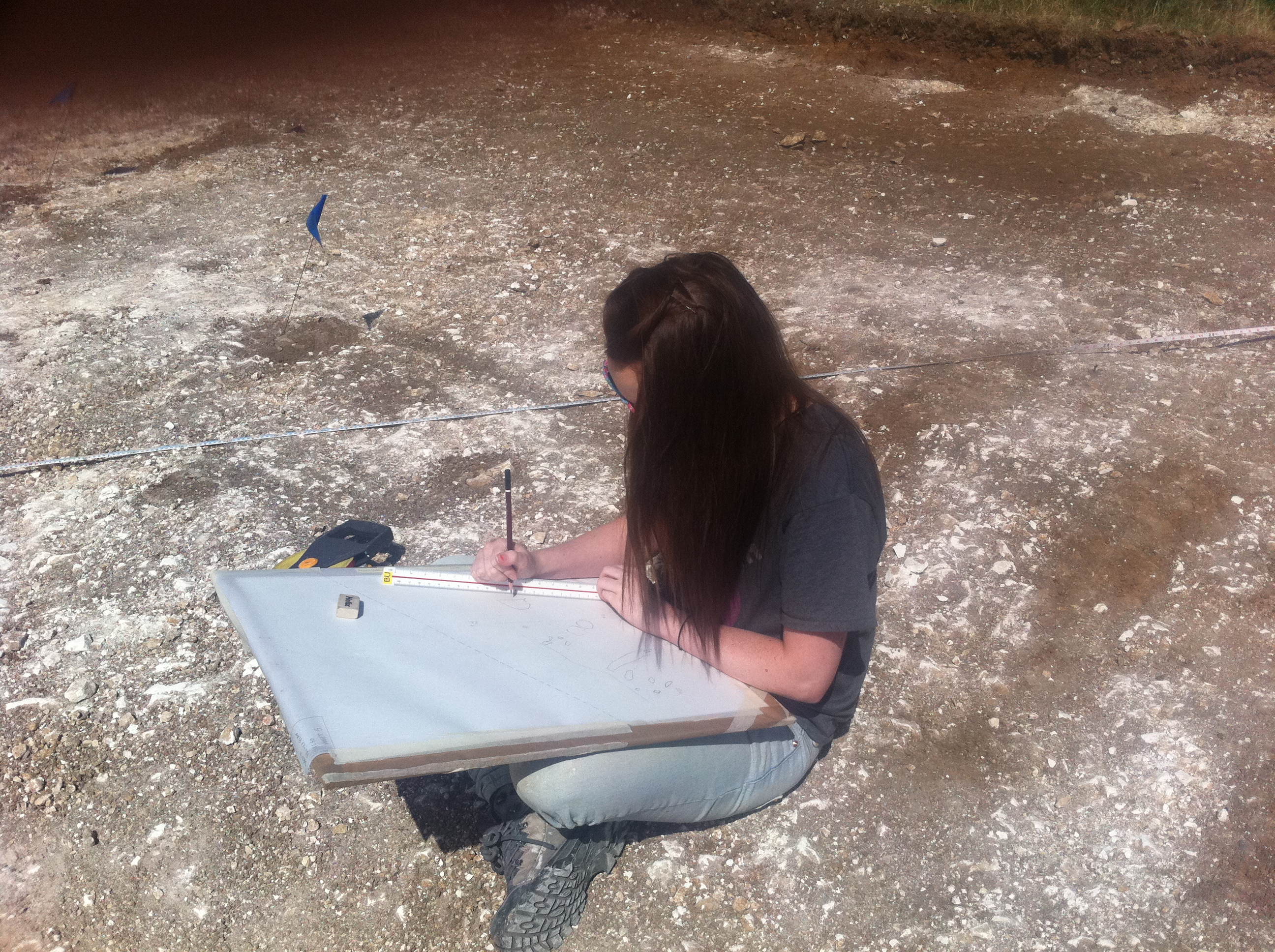
Here I am recording the contexts of my pit when it was newly uncovered with a clean edge to visualise the different colours/sediment types.

Image

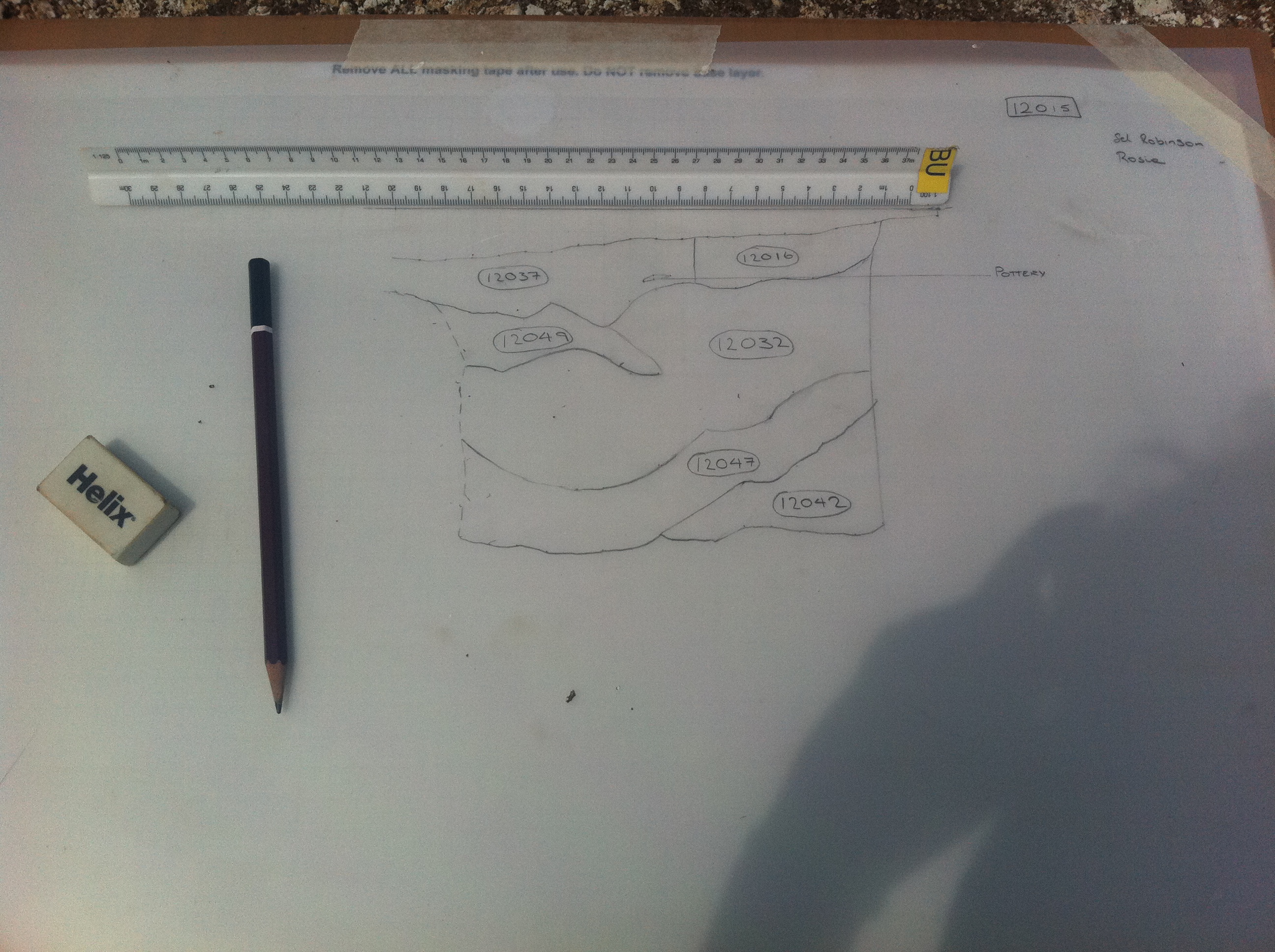
Here is my first ever context plan!

Image

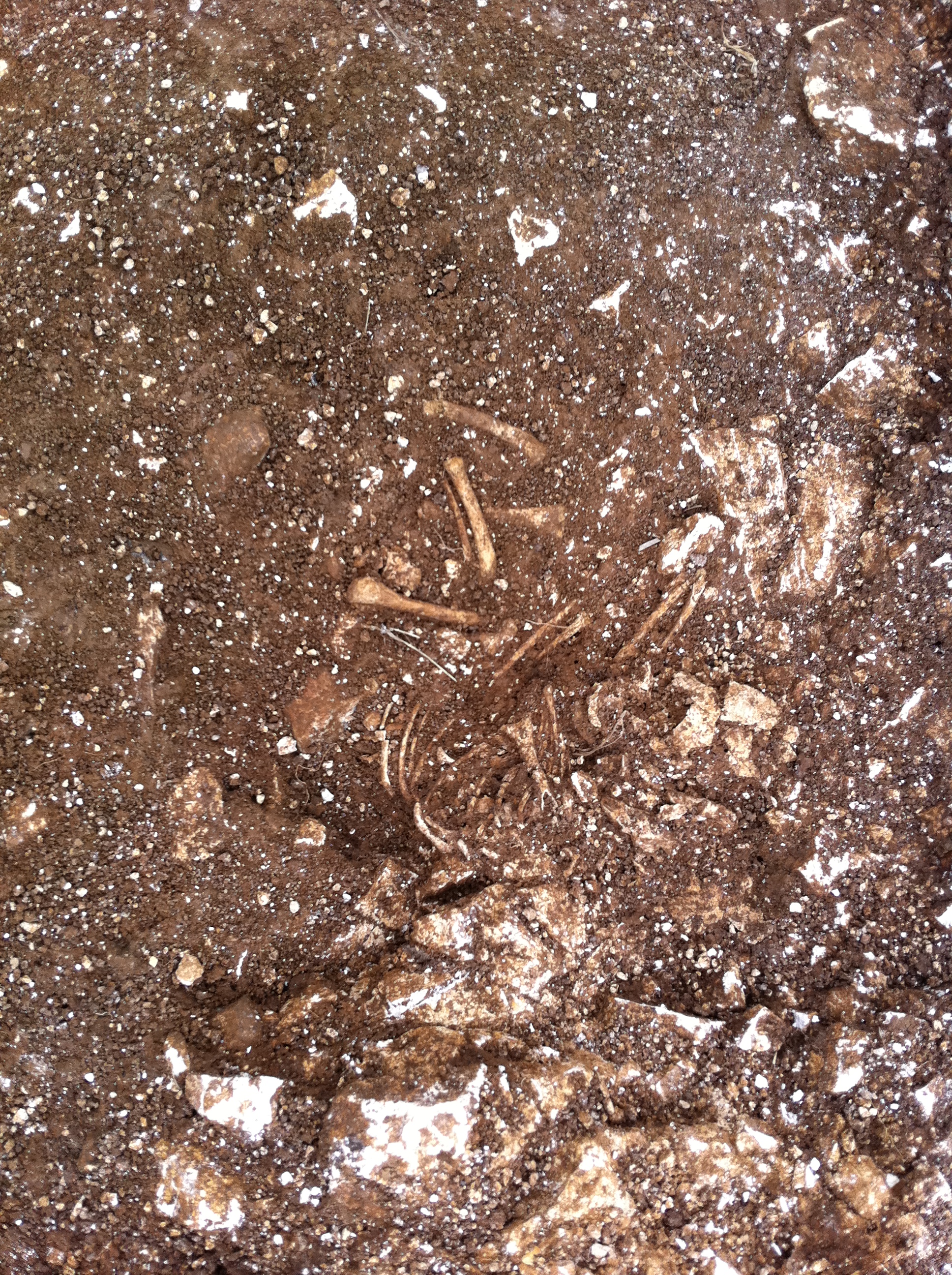
And this is my perinatal skeleton which I lifted and stored away and cared for over the last 2 weeks of my dig. 

Image

On of the many finds trays I went through – you can see the bones, bits of pottery and other goodies I found. In the evidence bag/foil is a huge lump of charcoal which was sent to the lab to be dated.

I had so much fun on this excavation and really enjoyed the teamwork and community whilst we all shared each others wheelbarrows when we needed to get rid of our useless dirt.

– Rosie

Unusual-ology: ‘Vampiric Burials’ – The archaeological evidence that supports the supernatural myths.

Unusual-ology is a new post type which focuses on weird new articles/science areas that have cropped up and caught my eye.

A recent news story, which can be viewed here, has brought to the attention of the public the topic of ‘vampiric burials’, due to the discovery of a 16th/17th century ‘vampiric burial’ in Poland.  These burials have been linked to vampire activity due to the unconventional layout of the skeletal remains – the occupants of the graves had been decapitated with their head placed between their legs. This activity of decapitating a suspected vampire had evolved from the European folk belief that decapitation is the only way to ‘keep the undead dead’. But this is not the first instance of the discovery of these superstitious burials.

Vampire Burials - Decap

The occupants of the graves had been decapitated with their head placed between their legs.

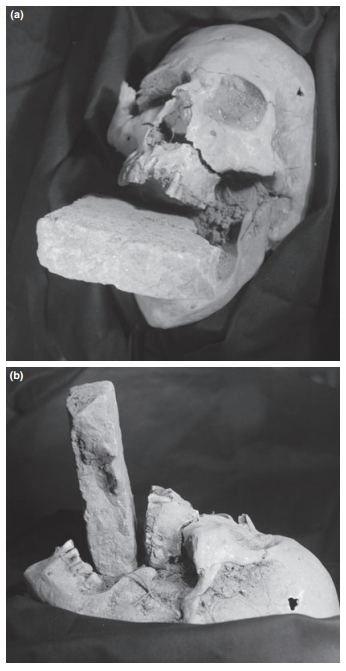
Another ‘vampiric burial’ was found in Venice during a research project on mass graves located in Nuovo Lazzaretto, where the corpses were from numerous plague deaths. One skeletal remains that stood out was that of a woman. The peculiar thing about this corpse was that a brick of moderate size was placed within her oral cavity, keeping her mandible wide open (Nuzzolese & Borrini, 2010).

Positioning of the piece of brick placed in the skeleton's oral cavity.

Position of the piece of brick placed in the skeleton’s oral cavity.

The positon of the brick was ruled out to be accidental, it wasn’t a piece of sediment that just happened to have fallen into place – it had been purposely placed there, but why? Nuzzolese & Borrini (2010) hypothesise that this is part of a symbolic burial ritual of which the gravediggers practice when there was a suspected vampire – who they thought could have been the cause for the plague ravishing their village.

Europe isn’t the only place to have encounters with ‘vampire graves’. A journal dating back ten years addressed America’s, more specifically New England, vampire folk beliefs using bioarchaeological and biocultural evidence. Sledzik & Bellantoni (1994) examined how folk beliefs associated with death and disease can impact archaeological records from their use of unusual post-mortem actions. In this study Sledzik and Bellantoni focused on a single 18/19th century male skeleton, known as J.B, aged between 50 to 55 years old. They chose J.B due to his skeletal remains being rearranged; the bones of his chest disrupted and his skull femoral placed in a “skull and crossbones” position.  J.B had died from either tuberculosis or a pulmonary infection – which was interpreted as tuberculosis, also known as consumption at the time of death.  It’s hypothesised that fellow family members, seven years later, contracted tuberculosis. The family assumed that the deceased male had returned from the dead and had ‘fed’ on them. From this notion, the family exhumed the corpse of J.B to kill the ‘undead’, keeping with the New England belief of killing a vampire by burning their heart. When they exhumed J.B. and found his body decomposed and missing his heart – which could then not be burnt – they decided the best course of action was to disrupt his corpse to stop reanimation.

So the discovery of the Polish vampire graves may have shot vampire burials into the limelight, but this isn’t the first archaeological case of superstitious vampire burial rituals, and it won’t be the last.

References:

Daily Mail. 2013. Archaeologists unearth ‘vampire graves’ containing decapitated skeletons with skulls placed between their legs on Polish building site. Daily Mail News.

Nuzzolese, E., Borrini, M. 2010. Forensic Apporach to an Archaeological Casework of “Vampire” Skeletal Remains in Venice: Ondontological and Anthropological Prospectus. Journal of Forensic Sciences. 55, 6. p1634-1637.

Sledzik, P., Bellantoni, N. 1994. Brief Communication: Bioarchaeological and Biocultural Evidence for the New England Vampire Folk Belief. American Journal of Physical Anthropology. 94, 2. p269-274.

If you’ve enjoyed this new ‘Unsual-ology’ post feature – leave a comment or a like!

If you want to read more unusual science posts click here!

Unusual-ology: How to get A-Head in Medieval England.

 This is a recap of lecture which I attended during my degree. It focused on an extremely weird case study which the lecturer had been presented with, a skull which had preserved soft tissue with ‘links to medieval witchcraft’. 

Within this lecture we were presented with a case study of a skull which had preserved soft tissue. The lecturer talked about how he had stumbled on this rare artefact in a peculiar museum which dealt in Wiccan and witchcraft. There it had a story allocated to it to entice an audience and raise curiosity.

This story was of medieval origins where brutal executions took place. This skull belonging to an execution victim was stored in a Church inside a wooden box covered in numerous markings of figures in communal scenes; these figures are depictions of ‘Green Men’. Intrigued by these mysterious figures and why they appeared on a wooden box along with scrape marks, I decided to do some research of my own. I found that ‘Green Men’ are deities of nature Gods which are often found within Churches and a symbol of pre-Christian religions often in Pagan origin. Could this skull have been kept as a relic? Does it belong to an important figure from medieval times? But after the War was it stolen from the Church and sold onto this museum?

What was peculiar about it was the preserved tissue only found on bodies in extreme conditions such as heat or cold or bodies submerged in bogs. The initial thought was “Could this marvellous story be true? It is a modern day fake, or is it something totally different? Or is it actually a mummy?”

What first stood out was that the skull had remains of eyes which mummies do not possess at the time of burial. Also from examining the skull and comparing the skulls to known parameters it was discovered to be the skull of a 35 to 45 year old woman. More tests were run using modern day technology such as MRI scans and CT scans, the MRI scan failed to show anything due to the lack of hydrogen atoms within the skull due to the dehydrated state it has deteriorated to. But there were surprising results from the CT scan which showed that there was a grey area in the back of the skull, could this be preserved brain? It turned out it was actually tree sap, which backs up the theory that this skull is actually a mummy. Egyptians used pine resin to preserve the bodies as its more ‘sacred’ than glue. There was also evidence that the septum of the skull had been broken by something, which is common in the procedure for mummification. To get a definitive answer to this riddle the final step was to use carbon dating; this helped determine that the skull is in fact a mummy and not a medieval relic or execution victim.

The use of all these modern technologies, theories and knowledge gained from previous case studies helped shine a light on the true origins of this skull. Other artefacts have been found to be something they’re not and are now being traced back to their true beginnings and having a new story assigned to them, for the future generations to be marvelled just as I was during this riveting lecture.

If you’ve enjoyed this new ‘Unsual-ology’ post feature – leave a comment or a like!

Unusual-ology: The Churkey: Half Turkey, Half Chicken?

Unusual-ology is a new post type which focuses on weird new articles/science areas that have cropped up and caught my eye.

I stumbled upon a very interesting article about a type of bird which has been dubbed as a ‘churkey’. The instant I saw the title I was immediately intrigued and felt I should write a post on these bizarre creatures.

The Transylvanian naked neck chicken has been recently assigned this nickname due to its unusual appearance; the ‘churkey’ has the body of a chicken but has the neck of a turkey.

Churkey

Photo of the Transylvanian ‘churkey’.

Scientists at Edinburgh University, led by Dr Denis Headon, have set out to understand what has caused the chicken to have this unique appearance. The scientists have proposed that its appearance is caused by genetic mutation which was enhanced by a vitamin A-derived substance that is produced around the bird’s neck. Researchers were able to identify this as the protein BMP12 after obtaining DNA samples from numerous naked neck chickens from Hungary, France and Mexico (BBC, 2011). This protein causes the feather production to be suppressed around the neck area. The mutation was first found in domestic birds in Romania around a hundred of years ago. It is suggested that the loosing of feathers around the birds necks help the bird to remain cool in warm climates just like Ostriches (National Geographic, 2011).

This proves that mutations in animals are not always bad and from this example it has helped scientists understand developmental biology even more. This research could also have practical applications such as to produce poultry that can withstand hotter climates such as those in the third world countries.


References:

BBC. 2011. Experts unravel ‘churkey’ appearance mystery. BBC News. Available from here – along with an image of said ‘churkey’.

National Geographic. 2011. Why Transylvanian Chickens Have Naked Necks. National Geographic News. Available from here.

If you’ve enjoyed this new ‘Unsual-ology’ post feature – leave a comment or a like!

Why is the mating between the closely genetically related Chimpanzees (Pan troglodytes) and Bonobos (Pan paniscus) so different?

Taken from an assignment in which I was set the task to combat a controversial question and then create a conference paper on the topic for a Primate Behavioural Ecology unit. This is a comparative approach of factors that could attribute to the differences, and not a definitive answer – just my analysis of theories/my own conclusion.

Abstract:

Primates, Pan troglodytes and Pan paniscus, both speciated from a shared last common ancestor, yet they have very different mating behaviours. Pan troglodytes are known for their aggressive behaviour, even when it comes to mating. Pan paniscus on the other hand are known to perform sexual activities for purposes other than reproduction. There are many social, physiological and environmental factors which could have caused this diverse approach to reproduction. Within this paper I will be utilising past research, conducted on these contributing factors, to theorise why these primates have created two different behaviours types when they are so close genetically.

Introduction

Chimpanzees (Pan troglodytes) and Bonobos (Pan paniscus) speciated from their last common ancestor and share similar genetic information (Ruvolo et al, 1994). Both Pan paniscus and Pan troglodytes habit Africa, where they are separated by the River Congo. Pan troglodytes commonly habit the west and central parts of Africa whereas the Pan paniscus habit the Democratic Republic of the Congo. Due to this separation it would seem that genetics have no vital role in the different mating styles, but the environment and social interactions do. To understand the behaviours of adult Pan troglodytes and Pan paniscus we need to understand their anatomy when it comes to mating.

Within the lifespan of Pan paniscus and Pan troglodytes they encounter many physiological changes, some of which are adaptive to their environments. Male Pan troglodytes reach maturity between the ages of nine and sixteen, and male Pan paniscus reach maturity around the age of nine. Female Pan troglodytes have their first estrus around the age of ten, which is characterised by the sex skin swelling. Pan paniscus have their first estrus before their menarche. Menarche, their first ovulatory cycle, occurs between six and eleven years old whereas for P. troglodytes it occurs after the first estrus (Cawthon-Lang, 2010).  As we can see there are certain similarities, such as the male maturity age, within both primates biological development, but as with menarche there are differences. So does this influence their mating behaviours?

Mating Behaviours

Both Pan troglodytes and Pan paniscus have been observed to practice opportunistic (multiple) mating (Cawthon-Lang, 2010). Multiple mating, also known as promiscuous mating is where a female will mate with numerous males within the population. Throughout the animal kingdom there are many benefits of practicing opportunistic mating;  increase genetic diversity, avoid infanticide, exchange resources, increase possibility of fertilisation and avoiding male harassment, compared to their costs: male retaliation, male aggression, and energy/time. There are numerous benefits for practicing multiple mating within a group of primates compared to the few costs. It must be noted that from multiple mating, female Pan troglodytes do not receive resources but receive decreased levels of male aggression and the choice of better males (Matsumoto-Oda, 1999). A key aspect of participating in multiple mating is ‘female choice’. The female can time which males she mates with in relation to her current ovulation state. When she feels she is at most fertile, she could choose to mate with more successful males within the group and when she isn’t at her most fertile mate with the lower ranking males (Matsumoto-Oda, 1999).

Pan troglodytes have also been observed practicing possessive and consort-ship mating (Cawthon-Lang, 2010). Possessive (restrictive) mating is when a male forms a short-term exclusive relationship with a female within a group, and consort-ship is when a female and male create a mutually exclusive relationship isolated from the group. It is thought that males make the choice to have a restrictive mating relationship while for consort-ship it is a mutual choice, as female co-operation is very important for this relationship to be established (Matsumoto-Oda, 1999).

There are many factors to consider when comparing the mating behaviours of these two primates. The main factor which has heavy influence on the sexual behaviour of are sociological. Sociological factors include gender dominance, philopatry, community type, and infanticide. Environmental factors such as predation and food abundance, play a minor part.

Influencing Factors

Pan troglodytes and Pan paniscus have some shared sociological factors such as both communities are of a fission-fusion social structure and that both are male-philopatric (Cawthon-Lang, 2010). A fission-fusion social group is where a large community is made up of temporary smaller sub groups and the population of the sub groups change due to movement between the subgroups. Smaller groups of Pan troglodytes can be made up of eight to ten members whereas larger groups could reach forty. An influencing factor on group size is food abundance; if there are a lot of resources a group will become larger, due to migration from smaller groups, to exploit the high supply of food (Boesch, 1996).

This fission-fusion social group system plays a vital role in the male-philopatric nature of these species. Male-philopatry is where the females leave their natal subgroups and migrate to another subgroup once reaching sexual maturity (Cawthon-Lang, 2010). This practice helps create better gene diversity within a population as there is less chance of inbreeding due to the males within the new subgroup usually not being related to the emigrated female (Inoue et al, 2008). During this migratory process the females have adolescent infertility which lasts from one to two years for P. paniscus and then two to four years for P. troglodytes. This is hypothesised to be an adaption to protect the female. For example, if a female arrived at a new subgroup with an infant or pregnant there could be violence and aggression towards them (Cawthon-Lang, 2010).

A big difference between Pan troglodytes and Pan paniscus is the dominate gender, with P. paniscus it is the females who are dominant, with P. troglodytes it is the males. Female Pan paniscus obtain rank as they age and have offspring, especially males. Their sons often have corroborating rank as they mature and as the adult female becomes more central to the group (Surbeck et al, 2010).

There are a few unique behaviours and social practices to both species. There are two behavioural practices within P. paniscus, which stems from the female dominance, which are the use of sex for communication and sex between females. Same-sex behaviour between dyads occurs in both wild and captive bonobos. The use of these behaviours has been theorised for the use of practice, paternity confusion, exchange, communication and appeasement (Mason et al, 1996). It is thought that the effective female-female coalitions against males within a population of Pan paniscus is facilitated by the same sex behaviours.

Wrangham (1993) identified five functional categories of sexual behaviour within a Pan paniscus population; conception, practice, paternity confusion, exchange and communication. The function of practicing sex, paternity confusion and an exchange of behaviours is also used within populations of Pan troglodytes. Practice by juvenile Bonobos may be vital for developing effective courtship and copulatory techniques. The paternity confusion aspect applies to situations in which adult males could become a threat to infants which are not their own. Use of sexual behaviour for exchanging of resources or benefits such as food or grooming. From the communication function, sex between dyads can be used for appeasement without affecting their relationship and to communicate about their social relationship (Mason et al, 1996).

A unique practice to P. troglodytes is infanticide. Infanticide has been documented at Gombe, Mahla and Kibale within the chimpanzee study sites and this practice has been often attributed to sexual selection theory. Male P. troglodytes are more likely to exhibit infanticidal behaviour, mainly killing infants that are unlikely to be theirs. Also the act of infanticide shortens the inter-birth intervals as it induces cycling in the females that have lost their offspring (Cawthon-Lang, 2010). Therefore the use of infanticide can increase a male’s chance of producing offspring. It is hypothesised that this is due to the link between suckling and amenorrhea (Fedigan and Rose, 1995). There has been documentation of females committing infanticide, but there is some question whether these were isolated incidences or could be related to dominance rank in females (Pusey et al, 1997). There hasn’t been any documentation of infanticide within a population of Pan paniscus which could be either assessed as the use of non-conceptual sexual behaviour causing paternity confusion, or that there just hasn’t been any witnessed accounts.

 Conclusion

The fact that Pan paniscus and Pan troglodytes share many social factors, such as fission-fusion social group structure and are both male-philopatric, shows that these factors in no way affect the aggressiveness of mating within the species. The main factors to contribute to this stark difference are the unique practices, such as sexual contact as communication for Pan paniscus and male dominance for Pan troglodytes, they have adopted into their communities.

The use of sexual behaviour within a Pan paniscus population to diffuse situations and establish relationship hierarchy has meant that most conflicts are resolved somewhat peacefully through sexual activity. Within a population of Pan troglodytes most conflicts are resolved by a fight or aggressive display.

There is a hypothesis that the adaption of violence is all down to Pan troglodytes habitat during the earlier eras. Earlier chimpanzees occupied a small compact area below the river, now known as the Democratic Republic of the Congo, isolated with no predators and an abundance of food. Whereas Chimpanzees above the river had to habit this area with a population of Gorillas. This caused a high demand for food, as both Pan troglodytes and Gorillas share the same diet which caused competition for food sources (Wrangham and Parish, 2001). This is used to explain why chimpanzees have adapted to use violence to solve conflicts.  There isn’t much supporting evidence for this ‘evolved to utilise violence’ approach but gives an interesting look into how environmental factors could have played a much bigger part in the moulding of Pan troglodytes aggressive behaviour.

It is more creditable to acknowledge that the communication within the Pan paniscus is a lot clearer, with resolutions met instead of an escalation of violence, which has a higher influence on the peaceful aspect of their society. This peaceful aspect along with the fact females entice the males into sexual activity, instead of the chimpanzee males soliciting sex, creates a mutual beneficial mating style.

References:

Boesch C. 1996. Social grouping in Taï chimpanzees. Great ape societies. Cambridge, England: Cambridge Univ Pr; p 101-13.

Cawthon Lang,  K. 2010. Primate Factsheets: Bonobo (Pan paniscus) Behavior . National Primate Research Centre.

Fedigan, L. Rose, L. 1995. Interbirth interval variation in three sympatric species of neotropical monkey. American Journal of Primatology. Volume 37 (1), 9-24.

Inoue, E. Inoue-Murayama, M. Vigilant, L. Takenaka, O. Nishida, T. Relatedness in Wild Chimpanzees; Influence of Paternity, Male Philopatry and Demographic Factors. American Journal of Physical Anthropology. Volume 137 (1), 256-262.

Manson, J. Perry, S. Parish, A. 1996. Nonconceptive sexual behaviour in bonobos and capuchins. International Journal of Primatology. Volume 18 (5), 767-785.

Matsumoto-Oda,  A. 1999. Female choice in the opportunistic mating of wild Chimpanzees at Mahale. Behav Ecol Sociobiol. Volume 46 (1), 258-266.

Pusey, AE, Williams, J, Goodall, J. 1997. The influence of dominance rank on the reproductive success of female chimpanzees. Science. Volume  277(5327), 828-831.

Ruvolo, M. Pan, D. Zehr, S. Goldberg, T. Disotell, T. 1994. Gene trees and hominoid phylogeny. Proceedings of the National Academy of Sciences of the U.S.A. Volume 91 (1), 8900-8904.

Surbeck, M. Mundry, R. Hohmann, G. 2010. Mothers matter! Maternal support, dominance status and mating success in male bonobos ( Pan paniscus ). Proceedings of the Royal Society Biological Sciences. Volume 278 (1), 590-598.

Wrangham, R. 1993. The evolution of sexuality in chimpanzees and bonobos. Human Nature. Volume 4 (1), 47-79.

With this modern day technology, can someone make a grave that would never be found?

Recap of the lecture by Paul Cheetham, Senior Lecturer and Geophysical Surveying Guru at Bournemouth University.

I found this lecture marvellous as it gave a great insight into the minds of murderers on the disposal of bodies be it a crime of passion or a calculated murder. Paul Cheetham talked about how a grave is like a time capsule capturing the personality and traits of the perpetrator. The grave can be also as important as the body; the grave could contain personal belongings of the victim as well as the criminal, some rogue hairs or blood, or contain the tools that made the murder and burial possible. I also understood the process and evolution of forensic archaeology, from the use of shovels and great man power to the new technology of geophysics and cadaver dogs. I found this to be extremely fascinating as the techniques evolved into a more archaeological practice and viable way of accessing more evidence.

So much can give a suspect away, the position of the grave, is it close to the road side with easy road access or in the middle of a field or woodlands? Is the grave in an area the suspect feels safe or familiar with? Is the grave within a 45 minute driving distance? If so this could give away a lot more than the perpetrator thinks. Our personality, skill level and habits are all visible when we create a grave. The nature of the grave also can be a clear marker, is there mixing of sub and top soil? Has the settlement of the grave filling exposed the graves indentation? Are there changes in the surrounding plants? Are they suddenly blooming or withering away? If yes to any of the above chances are that the body the murderer thought they buried safely with no possible way of spotting is soon going to be discovered by a dog walker doing their routes. Another great use of modern day technology is aerial photography which can clearly give away a grave with the different shadows and compressions of the earth and the biodiversity growing on top. From the use of this it is becoming increasingly easy to spot any unmarked graves from modern murders or medieval cemeteries.

Soon the use of these practices will help progress the use of archaeology within the criminal science spectrum and make it impossible for an unmarked grave to go unnoticed putting more criminals away.

How can computer games help conservation?

Recap of the lecture ‘How can Computer Games Help Conservation’ by Richard Stillman, Professor at Bournemouth University.

In this lecture we were presented with the idea of how games can be scientifically used to predict behaviour in animals. This was considered as ‘game theory’, examples of this included how animals avoid predation and breed more than competitors. I found this very fascinating and I was very intrigued when I read the lecture’s title. Richard Stillman described how this game theory might be applied and its uses, he explained how this allows us to understand how animals make their decisions and predict how animals may behave in future climates and other environmental factors.

To apply game theory, models on the principle are produced such as the Individual-based Model which assumes individuals vary in certain aspects such as competitive ability, and then predicts the survival rates. The model works on certain parameters such as the food supply, tidal exposure, daily food requirements and feeding rates. There are many places that have developed these models for ecology such as Cardiff Bay, Poole Harbour and even as far as Denmark.

These models have helped many species of animals survive by predicting their behaviours and the effect certain environmental factors will have on them including the proposal of building new barges in Severn River. The model constructed for this situation was able to highlight any problems the biodiversity might have with the construction and weigh the costs against the benefits. They found out that creating the Cardiff-Western barrage it will dramatically reduce the population of animals in that area whereas creating the Welsh Ground Lagoon will increase the biodiversity populations.

This shows that applying the game theory can help improve our understanding of animals’ habitual behaviours and our own impact on their habitats.

Welcome!

Hello and welcome to All Things AAFS!

This blog will discuss and dissect topics of contemporary sciences consisting of journals, published articles or even news that I have stumbled across and wish to expand on.

After finishing my BSc (Hons) degree I have embarked on this task to ensure that I stay up to date with all things AAFS and related to my degree. A few posts on this site will be from lectures or assignments that were set during the course of my degree, which I found fascinating so wish to share with others who are passionate about anything related to archaeological, anthropological and forensic sciences.

Well I hope you enjoy these insights into my experiences in the AAFS world and find them interesting.

Rosie.

Me during DBD'11


Me, inside my designated pit during the DBD’11 Archaeological dig held yearly by Bournemouth University.