Unusual-ology: Ancient Greek and Roman “Entrance to Hell” discovered.

Unusual-ology is a new post type which focuses on weird new articles/science areas that have cropped up and caught my eye.

Italian archaeologists from the University of Salento, led by Francesco D’Andria, working at a Greco-Roman site of ancient have discovered the ‘Entrance to Hell’.

ImageHieropolis, known today as Pamukkale, Turkey – where the “Entrance of Hell” has been located.

This ‘Entrance to Hell’ has been discovered in Hierapolis, known today as Pamukkale, in Turkey.  Francessco and the fellow archaeologists were able to stumble upon the entrance of the temple by tracing the path of the hot springs through the ancient site. The temple, identified as the Ploutonion, has been linked to Hades and correctly identified due to an ‘engraved dedication’ to Pluto above the gate. The temple was built over a cave and underground in the thermally active area. Ploutonion was the worship ground for many ancient pilgrims who would travel to celebrate their gods and bathe within the hot springs that surround the area.

The reason why the Ploutonion has been called the ‘Entrance to Hell’ is due to the writings of the Greek geographer Strabo. Strabo mentions about the “opening of sufficient size to admit a man, but there is a descent to a great depth… The space is filled with a cloudy and dark vapour, so dense that the bottom can be scarcely be discerned.” These documents explain that the cloudy, dark vapour has caused many animals that enter to die instantly. Strabo wrote that Bulls which had entered the Ploutonion “fell down and were taken out dead” and sparrows which were thrown inside “immediately fell down lifeless.” The Ploutonion’s poisonous vapour still survives today as many dead birds have been found on this site during modern excavations. The presence of the dead birds has helped convince the archaeological team that this is in fact Ploutonion’s true ‘entrance to hell’.

If you’ve enjoyed this new ‘Unsual-ology’ post feature – leave a comment or a like!

If you want to read more unusual science posts click here, or to read the Unusual-ology post on the Ancient Egyptian use of lettuce as an aphrodisiac, click here!

References:

Biblical Archaeology Society. 2013. Hierapolis and the Gateway to Hell. Bible History Daily News. Click here for the article, and to read more of Strabo’s writing on the Ploutonion.

Daily Mail. 2013. Is this the Gate of Hell? Archaeologists say temple doorway belching noxious gas matches ancient accounts of ‘portal to the underworld’. Daily Mail News. Click here for the article.

National Geographic. 2013. Archaeologists Find a Classic Entrance to Hell. National Geographic Daily News. Click here for the article.

Unusual-ology: Lettuce, an ancient Egyptian sex symbol?

Unusual-ology is a new post type which focuses on weird new articles/science areas that have cropped up and caught my eye.

Can this key ingredient to salads actually be considered a sex symbol? Well Salima Ikram, an Egyptologist from the American University of Cairo, has claimed that lettuce was viewed as an aphrodisiac by ancient Egyptians, where they also used it as a phallic symbol.

Image

Min – the Egyptian god of fertility and lover of lettuce.

So how did a distant species of our modern day lettuce become a sexy vegetable? On numerous tomb walls, dating back to 2,000BC, there are images of lettuce which have been connected to the Egyptian god of fertility – Min, who can be found depicted with an erect penis on numerous hieroglyphs. It is thought that lettuce was Min’s favourite food, and this vegetable helped him perform sexual acts without becoming tired. Many ancient Egyptians wouldn’t have utilised lettuce in meals like we commonly do, but often as an aphrodisiac.

References:

Daily Mail. 2013. The land where LETTUCE was a sex symbol: Leafy vegetables were taken as an aphrodisiac in ancient Egypt and considered a delicacy of the god of fertility. Daily Mail Online. Click here for the article!

Ikram, S. 2012. Food, drink, and feasting (Egypt). The Encyclopaedia of Ancient History. Blackwell Publishing. Can be viewed here in .pdf– if you have a Wiley Online account.

If you’ve enjoyed this new ‘Unsual-ology’ post feature – leave a comment or a like!

If you want to read more unusual science posts click here!

New Evidence Supports Conflict is Not Innate.

In a previous post – which can be found by clicking here – I had examined whether conflict was innate for humans after a lecture in University, which I concluded was true by analysing different theories but stressed that conflict only becomes active due to a stimulus. That stimulus could either be biological, seen in aggressive mating, or environmental, such as intraspecific/intrespecific competition. But a recent study, noticed by the BBC has put a spanner in the works, as the leading researcher – Patrik Soderberg – says that conflict isn’t actually innate.

Soderberg’s research based its findings by studying isolated tribes from numerous places around the world which had been studied over the last century. By using modern primitive isolated tribes they were able to have a sample which was cut off from the modern day life and utilising the wild plants and animals that inhibit their environment, surviving like the much older hunter-gatherers.

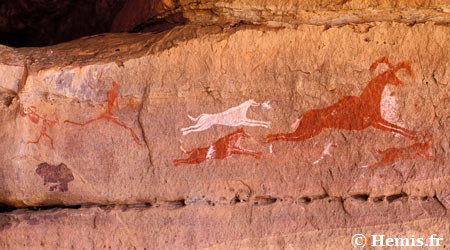
Ancient hunter-gatherer cave art.

Ancient hunter-gatherer cave art.

Using these modern day tribes as an analogy for the earlier societies that ruled the lands, they assessed and analysed any violent deaths. They found that in their sample populations there were 148 violent deaths, but very few were caused by widespread war. Most of the violent deaths were caused by personal motives ranging from family feuds or adultery.

Soderberg has admitted that these modern tribes were not a ‘perfect model’ for the ancient civilisations but said that due to vast significant similarities they did allow for an insight into the past. From this study he concluded that war may have developed later as the hunter gathers became more agriculture orientated and territorial with a complex social structure. “As humans settled down, then war becomes more dominant and present. For these primitive societies, war has not yet entered the picture,”.

References:

BBC. 2013. Primitive human society ‘not driven by war’. BBC News. Available here.

Soderberg, P., Fry, D. 2013. Latest Skirmish Over Ancestral Violence Strikes Blow for Peace. Science. 341, 6143. P224. Here is a link to view the .pdf of this very interesting article.

Photos from my dig experience – DBD’ 2011


Image

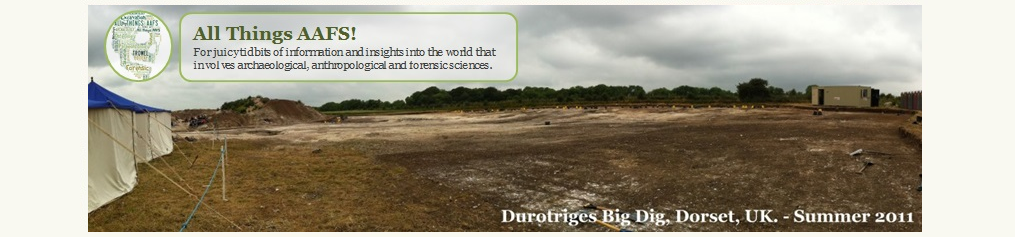
Panoramic view of the site – Day 5, clearing the topsoil to show off the hidden features.

Here is a blog post with some chosen photos from my time on the Durotriges Big Dig – held yearly by Bournemouth University. I went on this excavation as part of my first year units where I had to be part of this experience for the whole of June. We worked from 8-5pm every day and only had Sundays off. It really opened my eyes to the world of archaeology and gripped me and pushed me to carry on doing my course.This site is aged to be that of late Iron Age – Roman and is situated in Dorset, England and there is a Roman villa situated on site along with numerous houses.

I was allocated my own pit, which was a midden (refuse pit), where I was lucky enough to stumble upon two skeletons – one juvenile and one perinatal. It was amazing to have such a hands on experience so soon after starting my degree.

Image

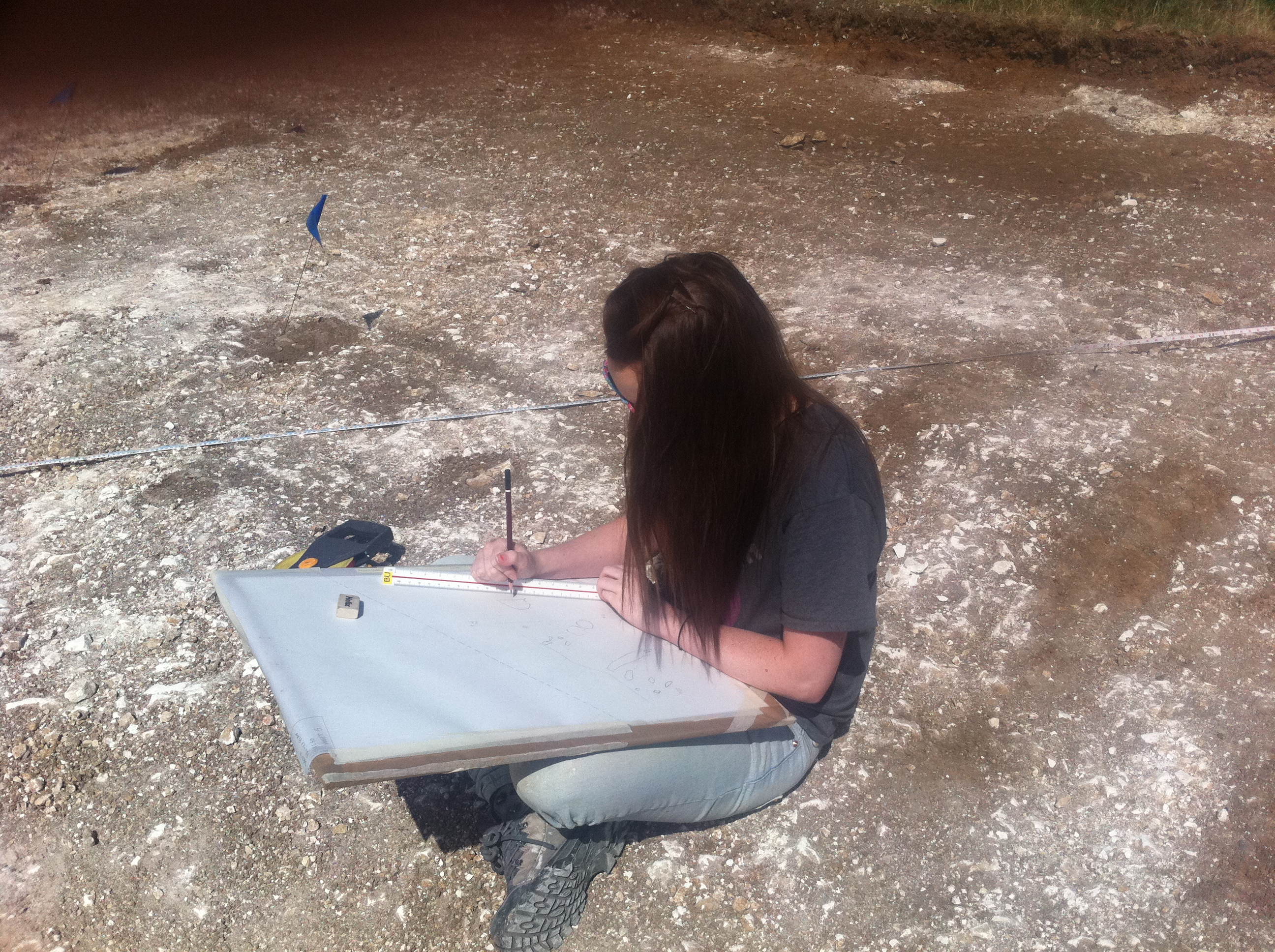
Here I am in my pit, doing an action shot with my trusty 4inch trowel! I had to wear a hard hat as the midden was more than 1m in depth and there is hard/sharp chalk everywhere!

Image

Here is a whole over shot of my lovely midden.

Image

Here I am recording the contexts of my pit when it was newly uncovered with a clean edge to visualise the different colours/sediment types.

Image

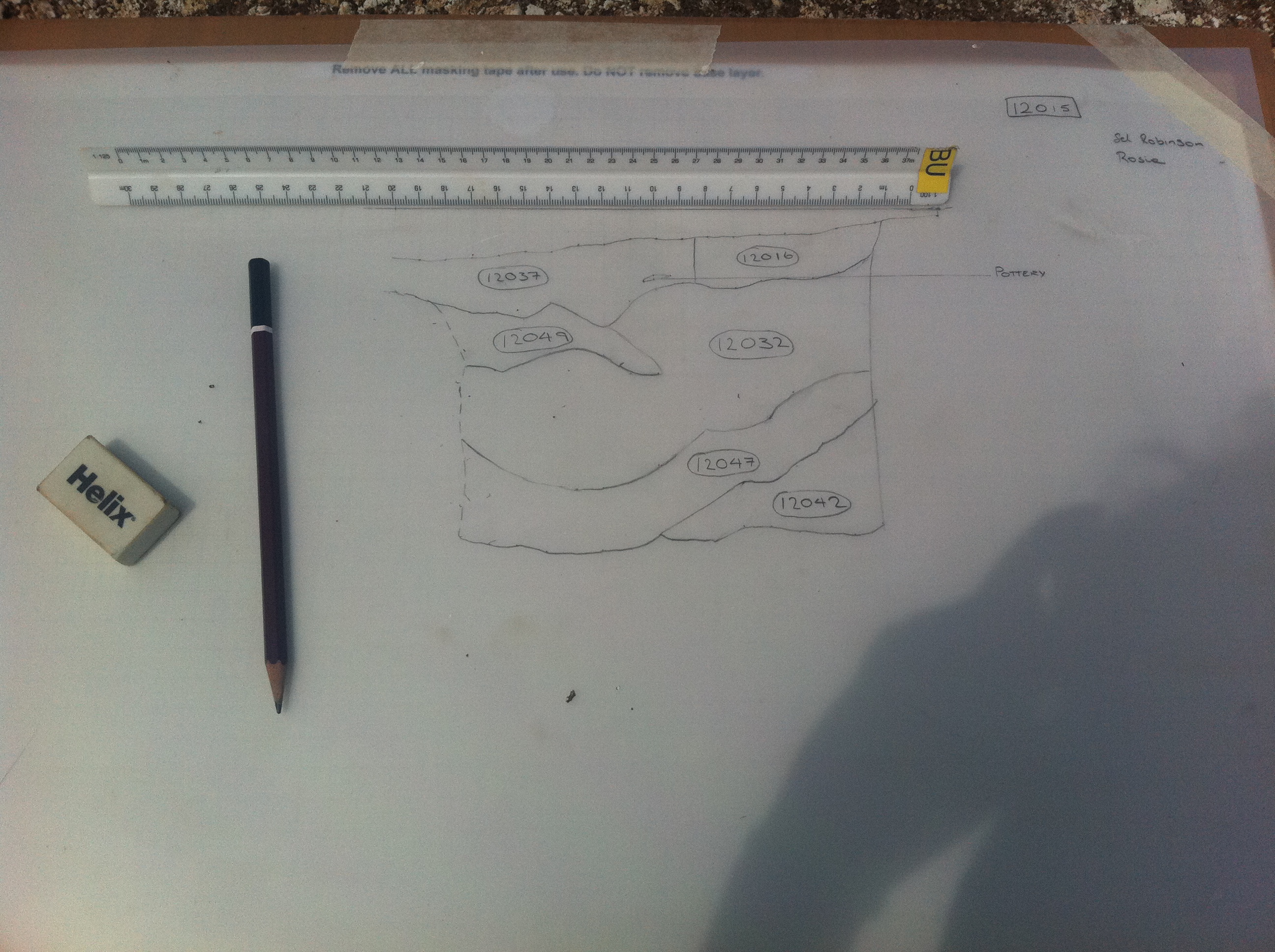
Here is my first ever context plan!

Image

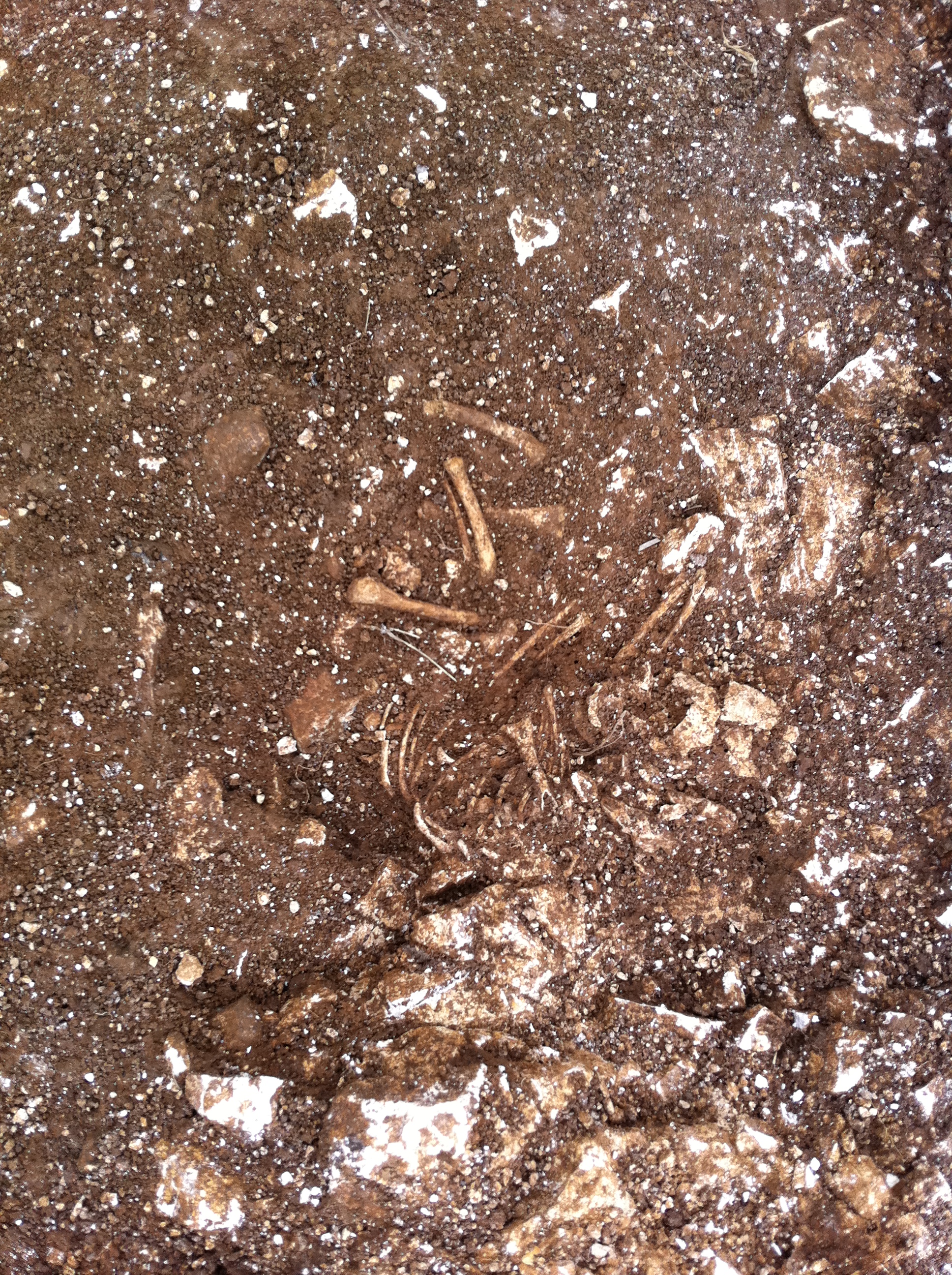
And this is my perinatal skeleton which I lifted and stored away and cared for over the last 2 weeks of my dig. 

Image

On of the many finds trays I went through – you can see the bones, bits of pottery and other goodies I found. In the evidence bag/foil is a huge lump of charcoal which was sent to the lab to be dated.

I had so much fun on this excavation and really enjoyed the teamwork and community whilst we all shared each others wheelbarrows when we needed to get rid of our useless dirt.

– Rosie

With this modern day technology, can someone make a grave that would never be found?

Recap of the lecture by Paul Cheetham, Senior Lecturer and Geophysical Surveying Guru at Bournemouth University.

I found this lecture marvellous as it gave a great insight into the minds of murderers on the disposal of bodies be it a crime of passion or a calculated murder. Paul Cheetham talked about how a grave is like a time capsule capturing the personality and traits of the perpetrator. The grave can be also as important as the body; the grave could contain personal belongings of the victim as well as the criminal, some rogue hairs or blood, or contain the tools that made the murder and burial possible. I also understood the process and evolution of forensic archaeology, from the use of shovels and great man power to the new technology of geophysics and cadaver dogs. I found this to be extremely fascinating as the techniques evolved into a more archaeological practice and viable way of accessing more evidence.

So much can give a suspect away, the position of the grave, is it close to the road side with easy road access or in the middle of a field or woodlands? Is the grave in an area the suspect feels safe or familiar with? Is the grave within a 45 minute driving distance? If so this could give away a lot more than the perpetrator thinks. Our personality, skill level and habits are all visible when we create a grave. The nature of the grave also can be a clear marker, is there mixing of sub and top soil? Has the settlement of the grave filling exposed the graves indentation? Are there changes in the surrounding plants? Are they suddenly blooming or withering away? If yes to any of the above chances are that the body the murderer thought they buried safely with no possible way of spotting is soon going to be discovered by a dog walker doing their routes. Another great use of modern day technology is aerial photography which can clearly give away a grave with the different shadows and compressions of the earth and the biodiversity growing on top. From the use of this it is becoming increasingly easy to spot any unmarked graves from modern murders or medieval cemeteries.

Soon the use of these practices will help progress the use of archaeology within the criminal science spectrum and make it impossible for an unmarked grave to go unnoticed putting more criminals away.