Quick Tips: How To Estimate The Chronological Age Of A Human Skeleton – Epiphyseal Closure Method.

This Quick Tips post is the second in the series on age estimation on skeletal remains, if you haven’t read the previous post click here. The previous post provides an overview of the different techniques utilised by archaeologists/anthropologists, which will each be covered in more detail in their own blog post, and the categories that human skeletal remains are placed under according to their chronological age.

One of the methods frequently used by archaeologists/anthropologists to estimate the chronological age of human remains is by studying the level of epiphyseal fusions.

But first what is an epiphysis? An epiphysis is the cap at the end of a long bone that develops from a secondary ossification center. Over the course of adolescence the epiphysis, which is originally separate, will fuse to the diaphysis. The ages of which epiphyseal fusion begins and ends are very well documented, with the majority of epiphyseal activity taking place between the ages of fifteen and twenty-three.

Epiphyses

Diagram showing where the epiphysis is found.

As epiphyseal fusions are progressive they are often scored as either being unfused (non-union), united, and fully fused (complete union). Females often experience the union of many osteological elements before males, and every individual experience epiphyseal union at different ages.

Left: Diagram of a skeleton showing the position of the different epiphyseal elements. Right: A graph displaying the timing of fusion of epiphyses for various for various human osteological elements. The grey horizontal bars depict the period of time, in ages, when the fusion is occurring. All of the data is representative of males, except where it is noted. Data taken from Buikstra & Ubelaker, 1994.

Left: Diagram of a skeleton showing the position of the different epiphyseal elements.
Right: A graph displaying the timing of fusion of epiphyses for various for various human osteological elements. The grey horizontal bars depict the period of time, in ages, when the fusion is occurring. All of the data is representative of males, except where it is noted. Data taken from Buikstra & Ubelaker, 1994.

Archaeologists/anthropologists use standards that are well known and documented, such as Buikstra & Ubelaker’s (1994) depicted in the above graph. From the above data we know that, for example, the fusion of the femur head to the lesser trochanter is begins around the age of fifteen and a half and ends around the age of twenty. So if a skeleton has evidence of an unfused femur head/lesser trochanter, there is a possibility of the skeleton having a chronological age of < fifteen years. If there is full union of the epiphyses then the skeleton is more than likely being > twenty years old. But it should be noted that individuals vary in their development so numerous elements should be examined before coming to an accurate conclusion.
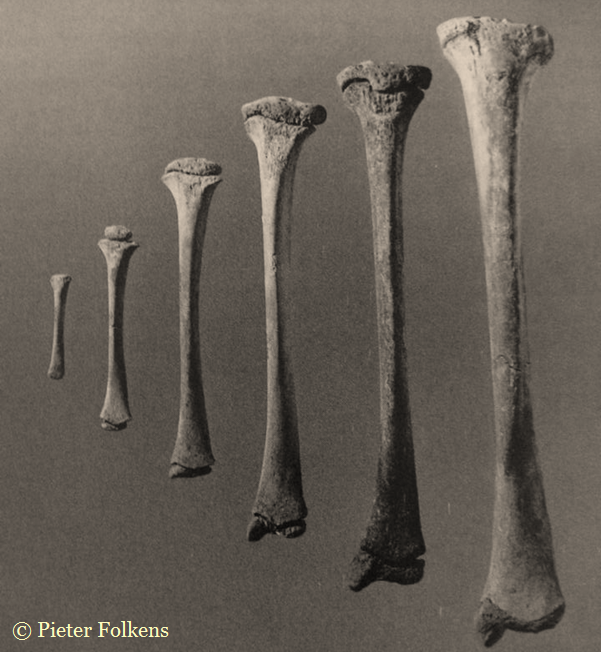
Different stages of epiphysis fusion of human tibias. Ages left to right: Newborn, 1.6 years old, six years old, ten years old, twelve years old and eighteen years old.

Different stages of epiphysis fusion of human tibias. Ages left to right: Newborn, 1.6 years old, six years old, ten years old, twelve years old and eighteen years old.

As several elements of the human skeleton begin the stages of epiphyseal fusion alongside the conclusion of tooth eruption, these two techniques (dentition and epiphyseal closure) are often used complementary to each other to help age sub-adults. The next post in this series on age estimation will focus on the use of dentition to aid with the chronological ageing of human remains.

References:

Buikstra, J.E., Ubelaker, D.H. 1994. Standards for Data Collection From Human Skeletal Remains. Fayetteville, Arkansas: Arkansas Archaeological Survey Report Number 44.

White, T.D., Folkens, P.A. 2005. The Human Bone Manual. San Diego, CA: Academic Press. Pg 360-385.

This is the second of a Quick Tips series on ageing skeletal remains, the next in this series will focus on the dentition method of ageing sub-adults. To read more Quick Tips in the mean time, click here

To learn about basic fracture types and their characteristics/origins click here!
Archaeologists Discover Tomb of Moche Priestess-Queen.

Archaeologists Discover Tomb of Moche Priestess-Queen.

The archaeologists, led by Luis Jaime Castillo Butters, discovered the tomb within the excavation site situated in San José de Moro, in the Jequetepeque River valley of northern Peru. The tomb belongs to what is believed to be a powerful Moche Priestess-Queen, who was buried 1,200 years ago and is thought to have been a prominent figure in Moche civilisation.

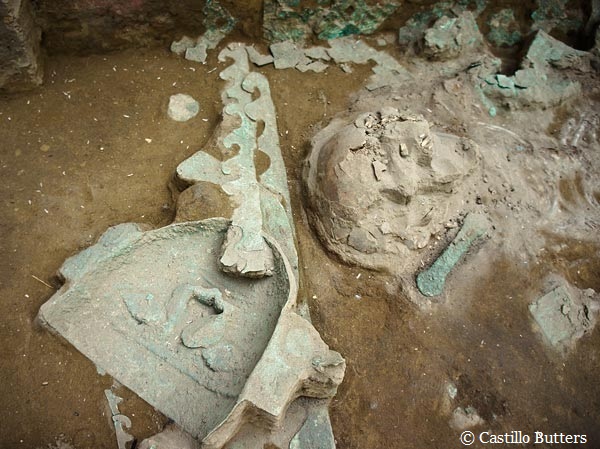
The tomb of the Moche Priestess-Queen, which was discovered six metres underground in San  José de Moro.

The tomb of the Moche Priestess-Queen, which was discovered six metres underground in San José de Moro.

The tomb consisted of a large chamber situated twenty feet underground and the large earthen walls of the tomb were painted red. The Priestess-Queen was found at one end of the chamber and resting on a low platform with a simple bead necklace, consisting of local stones, adoring her neck. Two adult skeletons were also found alongside the Priestess-Queen, who have been presumed to be sacrificed female attendants and five children were also buried in the tomb.

The most important clue that identified the female skeleton as a powerful Moche Priestess-Queen was a tall silver goblet that was found placed next to the skeleton. These silver goblets have been seen in numerous Moche art pieces, depicting scenes of human sacrifice and blood consumption. Other similar goblets were previously found in tombs of other Priestess-Queens.

Another clue to the female’s identity as an important person was the coffin itself. The coffin is assumed to have been made out of wood or cane, as it has decayed over the many centuries leaving only the copper plaques that covered it. The plaques trace out a typical Moche design, consisting of waves and steps, which now lay beside the skeleton where the wall of the coffin collapsed. Near the head of the skeleton was a copper funerary mask, which is thought to have been arranged on top of the coffin at the time of burial, and by the foot of the coffin were two pieces of copper shaped like sandals. Castillo Butters explains that “the coffin was anthropomorphised so that it became a person”.

The funerary mask discovered next to the Moche Priestess-Queen, who's skeleton can be seen in the background.

The funerary mask discovered next to the Moche Priestess-Queen, who’s skeleton can be seen in the background.

“The Moche seem to have believed that the identities that gave prominence to these individuals in life were to be maintained after death,” explains Castillo Butters. “Accordingly, they imbued their burials not only with symbols of religion and power, but [also] with the artifacts and costumes that allowed the priest and priestesses to continue performing their ritual roles in the afterlife.”

Click here to read about the Llullaillco Maiden, a 500yr old Inca child mummy, who was recently discovered to have been drugged before being sacrificed for the Incan ritual of Capacocha.

Quick Tips: How To Estimate The Chronological Age Of A Human Skeleton – The Basics.

Estimation of age-at-death involves observing morphological features in the skeletal remains, comparing the information with changes recorded for recent populations of known age, and then estimating any sources of variability likely to exist between the prehistoric and the recent population furnishing the documented data. This third step is seldom recognized or discussed in osteological studies, but it represents a significant element. – Ubelaker, D. 1989.

There are numerous markers on a human skeleton which can provide archaeologists and anthropologists with an estimate age of the deceased. The areas of the skeletal remains that are studied are:

If the skeletal marker listed above is a link, it means that I have already covered it in an individual blog post and can be found by following the link.

We can age skeletal remains to a rough estimate, as over a lifetime a human skeleton undergoes sequential chronological changes. Teeth appear and bone epiphyseal form and fuse during childhood and adolescence, with some bone fusing, metamorphose and degeneration carrying on after the age of twenty. Buikstra and Ubelaker, 1994, developed seven age categories that human osteological remains are separated into. The seven age classes are; fetus (before birth), infant (0-3 years), child (3-12 years), adolescent (12-20 years), young adult (20-35 years), middle adult (35-50 years), and old adult (50+ years).

When it comes to ageing skeletal remains, there are numerous problems. This is because individuals of the same chronological age can show difference degrees of development. Therefore, this causes archaeologists and anthropologists to obtain an accurate age estimate, which may not be precise.

It should be noted that it is a lot easier to deduce a juvenile/sub-adult’s age, as the ends of the limb bones form and fuse at known ages and the ages of which tooth formation and eruption occur are very well documented, although somewhat variable. After maturity there is little continuing skeletal change to observe, this causes adult ageing to become more difficult.

References:

Buikstra, J.E., Ubelaker, D.H. 1994. Standards for Data Collection From Human Skeletal Remains. Fayetteville, Arkansas: Arkansas Archaeological Survey Report Number 44.

Ubelaker, D.H. 1989. Human Skeletal Remains: Excavation, Analysis, Interpretation (2nd Ed.). Washington, DC: Taraxacum.

White, T.D., Folkens, P.A. 2005. The Human Bone Manual. San Diego, CA: Academic Press. Pg 360-385.

This is the first of a Quick Tips series on ageing skeletal remains, the next in this series will focus on the epiphyseal closure method of ageing sub-adults. To read more Quick Tips in the mean time, click here

To learn about basic fracture types and their characteristics/origins click here!

Quick Tips: Fracture Types – The Basics Pt 2.

In my previous Quick Tips, which you can find by clicking here, you were introduced to the first six basic types of fractures, what the main causes of fractures are, and the two main categories they are classed in. It is important that you know the information in the previous Quick Tips post before learning these last few basic fractures, as it discussed the fundamentals of fractures.

Basic Fracture Types:

Image

Fracture Types: A) Butterfly, B) Longitudinal, C) Segmented, D) Hairline, and E) Avulsion.

A) Butterfly Fracture: Butterfly fractures usually affect long bones and can be caused by car accidents or by being knocked side on.

B) Longitudinal Fracture: As a transverse fracture is a bone along the horizontal axis, a longitudinal fracture is along the vertical axis.

C) Segmented Fracture: This is when the bone has fractures in two parts of the same bone causing the bone to break into larger bone fragments which are separated from the main body of a fractured bone.

D) Hairline Fracture: These fractures are also known as ‘stress fractures’. These types of fractures are very difficult to diagnose and once they heal there may be no evidence left to see. These are very difficult, if not impossible to identify when in an archaeological context.

E) Avulsion Fracture: Avulsion fractures are characterised as the separation of a small fragment of bone at the site of attachment of a ligament or tendon.

The next Quick Tips post will discuss the ‘named fractures’ that can be discovered in archaeological contexts, such as the familiar Bennett’s and Parry’s fracture, and their origins and common causes.

This post was put together by using knowledge from my degree and supplemented with the textbook ‘The Archaeology of Disease’ by Charlotte Roberts & Keith Manchester. If you’re interested in the latest scientific and archaeological techniques used to understand the diseases of past populations, you should check it out!

This is the second post of a set on fractures, so keep your eyes open for the other posts. To view other Quick Tips posts click here!

Quick Tips: Fracture Types – The Basics.

In my previous Quick Tips post I addressed how to distinguish between ante, peri and post-mortem fractures, click here if you haven’t read it yet. 

In this Quick Tips post I will show you some ways to identify and deduce common fracture types and their key characteristics. The definition of a fracture is a break in the continuity of a bone. There are three major causes of fractures: acute injury (an accident); underlying disease which then weakens the bone making it susceptible to fractures; and repeated stress (as seen in athletes).

All fracture types can be placed in two categories; open and closed. An open fracture, also known as a compound fracture, is where the bone breaks through the skin causing an open wound. It is called an open fracture as there is an open connection between the fracture site and skin. A closed fracture is where the bone has no connection between the outer skin surface and the fractured bone itself; it does not cause an open wound. A closed fracture is classed as a ‘simple fracture’.

Basic Fracture Types:

Image

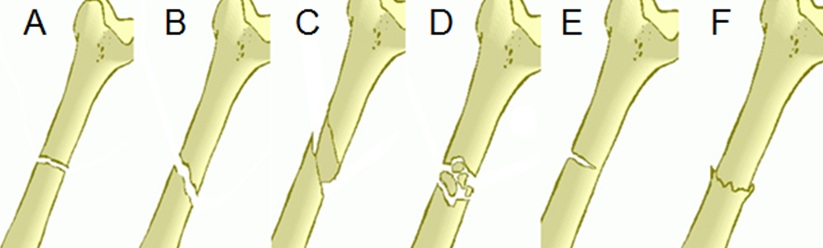
Fracture Types: A) Transverse, B) Oblique, C) Spiral, D) Comminuted, E) Greenstick, and F) Impacted fracture.

A) Transverse Fracture: This is when the break of a fracture is in a horizontal line, it is the simplest fracture type.

B) Oblique Fracture: This fracture is a break which extends in a slanting direction.  Oblique fractures are caused by indirect or rotational force.

C) Spiral Fracture: As you can guess from the name, this is a fracture which is characterised by a spiral. It is often denoted as being caused by torsion or force onto the bone.

D) Comminuted Fracture: A comminuted fracture is characterised from the splintering of the bone. This causes the fracture to be made up of two or more pieces. This fracture is common in road-traffic accidents and these fractures are less likely to heal in a functionally satisfactory manner.

E) Greenstick Fracture: This occurs when a transverse fracture is incomplete. This fracture is seen mainly in children due to their young, immature bones which rarely break the whole width.

F) Impacted Fracture: This occurs when the bone is broken and not displaced but the two fractured ends are forced together. This produces a rather stable fracture which can heal readily but there may be some length lost.

This post was put together by using knowledge from my degree and supplemented with the textbook ‘The Archaeology of Disease’ by Charlotte Roberts & Keith Manchester. If you’re interested in the latest scientific and archaeological techniques used to understand the diseases of past populations, you should check it out!

This is the first post of a set, click here to read the second post. To view other Quick Tips posts click here!

Unusual-ology: Ten Year Old Boy Finds ‘Egyptian Mummy’ In Grandmothers Attic.

Alexander Kettler, a ten year old boy from Diepholz in northern Germany, had a startling discovery in his grandmother’s attic when he stumbled upon what appears to be an Egyptian mummy in a mysterious wooden chest. The wooden box, which is covered in ancient hieroglyphs, was apparently bought in Africa around during the 1950’s by his late grandfather. But this Egyptian mummy isn’t all he found in the wooden chest. The chest also contained a death mask and a canopic jar, where the organs removed during the mummification process are stored.

Image

Image of the suspected Egyptian mummy in the hieroglyph covered sarcophagus.

The boy’s father now plans to take the mysterious box to Berlin to get it examined by experts to see whether this is a genuine mummy or a fake. He believes that the sarcophagus and jar are fake but the mummy might prove to be the real deal as it’s not “something you could buy at a shop around the corner”.

If the mummy is sent off for verification it will be subjected to MRI and CT scans, which may come back negative as mummies tend to be so dehydrated that there is a lack of hydrogen atoms – which the scans rely on. The use of carbon dating will be fundamental in identifying whether this is a true Egyptian mummy or a fake.

There are lots of problems occurring in the archaeological world, from fake mummies or mummies being wrongly labelled as something there not. One such example is my Unusual-ology post focusing on the topic of a lecture I had during my undergraduate degree. The lecture explored the past of a decapitated head which had preserved soft tissue, that was on display in a Wiccan and witchcraft museum under the guise of an execution victim, which was later stored in a decorated wooden box in a Church.

References:

BBC. 2013. German boy finds ‘a mummy’ in grandmother’s attic. BBC News. Available here. 

Daily Mail. Mummy there’s a mummy in grandma’s attic! Boy discovers ‘Egyptian body’ inside an old wooden chest. Available here. 

If you’ve enjoyed this new ‘Unsual-ology’ post feature – leave a comment or a like!

If you want to read more unusual science posts click here, or to read the Unusual-ology post on the Ancient Egyptian use of lettuce as an aphrodisiac, click here. Or to read about the newly discovered ‘Entrance to Hell’ click here!

500yr Old Inca Child Mummies Found Drugged.

Archaeologists have found three Inca child mummies dating back to 500yrs on the top of the 22,000ft summit of the Mount Llullaillco volcano in Argentina. One of the mummies found is that of a thirteen year old girl, now dubbed as the ‘Llullaillaco Maiden’, the other two mummies are that of a boy and a girl aged around four years old. The mummy of Llullaillaco Maiden is remarkably preserved whereas the remains of the boy and the girl were struck by lightning and so are charred.

The thirteen year old Llullaillco Maiden mummy which was discovered on top of a 22,000ft mountain in Argentina. Photo © Johan Reinhard.

The thirteen year old Llullaillco Maiden mummy which was discovered on top of a 22,000ft mountain in Argentina. Photo © Johan Reinhard.

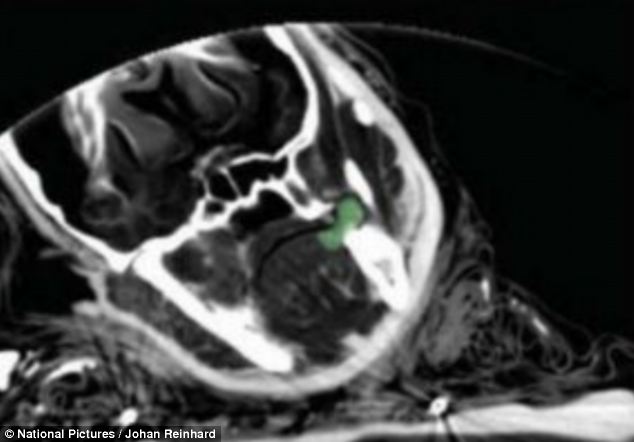
The mummies were found separately entombed within a shrine, and were originally discovered in 1993 by Dr Andrew Wilson and his team of archaeologists from Bradford University. But it’s the recent findings that have spurred them into the news. The team of archaeologists analysed strands of the three mummies’ hair and discovered that in their later years they were drugged with beer and cocaine. As the Llullaillco Maiden’s hair was so long, with a centimetre of hair growth estimated per month, it allowed for an analysis that compared the alcohol and cocaine consumption during her last 21 months of life. An axial radiograph also showed that a coca leaf was held between the Llullaillco Maiden’s teeth. It is thought that she was fed the coca to subdue her during the Inca rituals.

Axial radiograph of the thirteen year old mummie, shown highlighted in green is the coca leaf.

Axial radiograph of the thirteen year old mummie, shown highlighted in green is the coca leaf.

It is thought that according to Inca beliefs, the children served as guardians over their villages from the heights of the mountains. Capacocha was a ritual in which local lords were required to select unblemished children (representing the ideal human perfection), who were then married and returned to their original communities where they were honoured before being sacrificed to the mountain gods. The ritual of capacocha took place upon the death of an Inca king.

The mummies now reside in the Museo de Arqueología de Alta Montaña (MAAM) in Salta, Argentina.

References:

Daily Mail. 2013. Drugged with beer and cocaine and left to freeze to death, 500-year-old mummies of sacrificed Inca children reveal their secrets. Mail Online. Available here. 

National Geographic. 2013. Inca Child Sacrifice Victims Were Drugged. National Geographic Daily News. Available here. 

Wilson, A., Taylor, T., Ceruti, M. C., Chavez, J.A., Reinhard, J., Grimes, V., Meier-Augenstien, W., Cartmell, L., Stern, B., Richards, M.P., Worobey, M., Barnes, I., Gilbert, M.T. 2007. Stable isotope and DNA evidence for Ritual Sequences in Inca Child Sacrifice. Proceedings of the National Academy of Sicences of the United States of America. 104, 42. Pg 16456-16461. Available here. 

Quick Tips: How can you tell if a skeletal fracture is ante, peri or post-mortem?

There is a relatively easy way to see whether a fracture to a skeleton is ante, peri or even post mortem. It is essential to detail and deduce which category a fracture falls into, as this is very important to see whether the fracture had played a part in the person’s death.

To first classify a fracture, we need to understand what the different categories mean. Some of you will already know these terminology, but here’s a quick reminder;

  • If a fracture is ante-mortem, it means that the fracture was made before death of the persons.
  • With peri-mortem fractures, it means that the fracture was received at or near the time of death of the persons – so could have been the fatal strike.
  • Post-mortem fractures are fractures that have been received after death, so during the time from death to the time of recovery. These fractures are usually from excavation processes, dismemberment, or even natural processes (soil, animal and plant activity).

You will be able to determine if a bone fracture was ante-mortem due to there being signs of healing which is shown by cell regrowth and repair.

With peri-mortem fractures, the person died before the healing started to take place, but the fractures will still contain the biomechanics that are present in ante-mortem fractures.

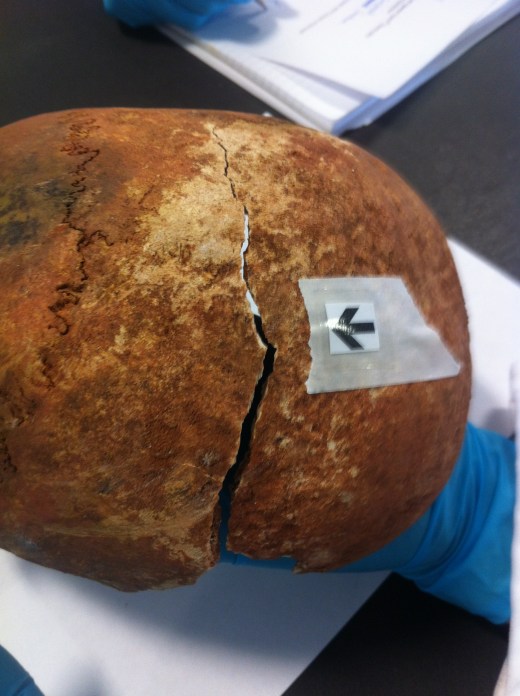
Post-mortem breaks tend to shatter compared to peri-mortem breaks which splinter, this is because bones which are in the post-mortem stage tend to be dry and rather brittle. Another big indicator of a fracture being post-mortem is the difference in colour.

The ‘Quick Tip’ that my applied anthropology lecturer taught me on how to easily distinguish between peri-mortem and post-mortem is to look at the fracture and decide; is it a clean break, as if you were breaking in half a bar of chocolate? If it is, then the fracture is most likely to be a peri-mortem fracture. If the break looks crumbly, like breaking a biscuit in half, it’s post-mortem fracture. Obviously this tip is not the most scientific, but it’s an easy way to begin your distinguishing process.

Image

Skull with signs of post-mortem fractures. This photo is from a practical lab session.

If you look at the photo above it illustrates a post-mortem fracture. You can determine this easily due to the colour difference on the edge of the fracture, where it is a much lighter colour compared to the rest of the skull and the crumbly nature of the cut.

References:

Most of this is my own knowledge that I learnt during my degree in my anthropology lectures/lab practical sessions. But if you’re looking for a published journal check the one below. It is very informative and easy to understand if you’re a beginner in the world of anthropology/archaeology! It also highlights some problems that can arise when distinguishing trauma, it’s really interesting!

Smith, A.C. 2010. Distinguishing Between Antemortem, Perimortem, and Postmortem Trauma. Academia.edu. Available from here in .pdf form!

Read more anthropology/archaeology quick tips here!

Well Preserved Dinosaur Tail Found in Mexico.

A team of archaeologists and students from of the country’s National Institute for Anthropology and History (INAH) have found a remarkably well preserved fossilised remains of a suspected dinosaur tail, near the town of General Cepeda, Coahuila in northern Mexico. The director of the INAH, Francisco Aquilar, has said that the tail, which has been measured to be five yards long, is the first one of its kind to be found in Mexico. The tail was identified to be belonging to a hadrosaurid ( a duck-billed dinosaur), where it is likely representative of  half the dinosaurs full length.

Top: The fossilised tail remains of the hadrosaur, recently discovered in northern Mexico.  Bottom: A electronic  artist rendering of the appearance of the suspected dinosaur.

Top: The fossilised tail remains of the hadrosaur, recently discovered in northern Mexico.
Bottom: A electronic artist rendering of the appearance of the suspected dinosaur.

But this tail hasn’t been the only fossilised remains of dinosaurs that they have found on this archaeological site. The archaeologists have also found what is suspected to be one of the dinosaurs hips. There have also been numerous dinosaur remains found within the state of Coahuila, with Aguilar noting that they have “a very rich history of paleontology” within that area.

There was an earlier fossilised remains discovery in 2010. The fossilised remains were of a never before discovered dinosaur within the same northern Mexico state as the recently discovered tail. The remains of the Coahuilaceratops, which was aptly named after the place of discovery, was discovered by a research group of palaeontologists from the Utah Museum of Natural History at the University of Utah. The excavation of the Coahuilaceratop marked the unearthing of the first horned dinosaur ever to be discovered in Mexico (News Center, 2010).

References:

Daily Mail. 2013. What happened to the rest of it? Archaeologists discover a 72million-year-old dinosaur tail in Mexican desert. Daily Mail News Online. Click here for an article about the dinosaur tail.

News Center. 2010. First Horned Dinosaur from Mexico. University of Utah. Available here. 

Unusual-ology is a new post type which focuses on weird new articles/science areas that have cropped up and caught my eye.

To read the Unusual-ology post on the Ancient Egyptian use of lettuce as an aphrodisiac, click here, or how male spiders sacrifice themselves to their mate, click here. Looking for an interesting article on the recent vampire burials, and past vampire burials, clickety click here.

Unusual-ology: Unexpected Items in the Bagging Area…

Unusual-ology is a new post type which focuses on weird new articles/science areas that have cropped up and caught my eye.

Archaeologists have made a very peculiar discovery in a churchyard near the St Pancras train station in London. The researchers, led by Phil Emery from Ramboll Cultural Heritage and Archaeology, have stumbled upon a coffin dating back between 1822 and 1858.  What has made the coffin so strange is that it had a large selection of bones from many different animals mixed among human remains. Within the coffin were nine bones from a Pacific walrus (Odobenus rosmarus divergens), eight mixed sets of human remains – including three skulls, and a tortoise.

Image

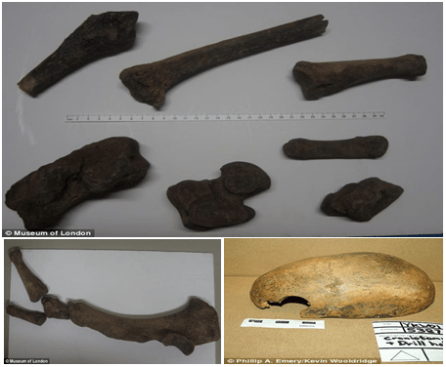
Top: Collection of the walrus bones. Bottom Left: The walrus’ back right leg. Bottom Right: The skull showing visible signs consistent with craniotomy.

The coffin was originally discovered in 2003 during excavations of the horizontal burial trench underneath the station, when the Eurostar terminal moved from Waterloo to St Pancras. Emery & Wooldridge (2011) have noted that the bones discovered have marks which are consistent to dissection, which was legalised by the Anatomy Act of 1832, with one skull showing evidence of craniotomy (drilling a hole in the skull to gain access to the brain). As the animal bones were found alongside human remains, Emery believes that the bones were used as a teaching collection from a research institute and has said that:

“The animal bone consisted of a small, moderately-preserved group of eight bones derived from a walrus of a very large size and robust build.’The sample includes bones from a lower fore-limb, a fore-foot, first and second metacarpal, the lower hind limbs, fibula, calcaneum, astragalus and first cuneiform. These bones are significantly larger than their reference equivalents held at the Natural History Museum. Microscopic examination revealed that all the St Pancras walrus bones show some degree of surface erosion and butchery marks. Three clear superficial transverse knife cuts were noted.”

The walrus bones have now been moved to the London Archaeological Archive and Research Centre in Hackney, East London.

If you’ve enjoyed this new ‘Unsual-ology’ post feature – leave a comment or a like!

If you want to read more unusual science posts click here, or to read the Unusual-ology post on the Ancient Egyptian use of lettuce as an aphrodisiac, click here. Or to read about the newly discovered ‘Entrance to Hell’ click here!


References:

Daily Mail. 2013. The ongoing mystery around how a Pacific walrus ended up buried in a human coffin beneath London’s St Pancras station. Daily Mail News. Article available here.

Emery, P., Wooldridge, K. 2011. St Pancras burial ground: excavations for St Pancras International, the London terminus of High Speed 1, 2002–3. Gifford, London. This book can be found here. 

Telegraph. 2013. Walrus remains found buried under St Pancras station in London. Telegraph News. Available from here.